Grid waitlists in NL & UK: what businesses can do
Stop waiting for grid capacity. Unlock it yourself withbehind‑the‑meter batteries and on‑site generation. The key question remains: what is the optimal BESS size? Both capacity and duration and how does it align with your supply contract and on‑site generation profile? Finding this match is essential to maximise savings, reduce grid dependence, and capture new revenue streams.
Short on time? Go straight to Figure 4.
Our optimisation shows that a 6 MWh, 1-hour battery delivers the best outcome in this case, cutting operating costs by 21% and reducing curtailment to near zero ⚡
⚡ The harsh reality: Grid congestion is stalling electrification
Across the Netherlands, businesses eager to electrify fleets, heating systems, and production lines are hitting a wall: grid congestion. Distribution System Operators (DSOs) like Enexis and Alliander are facing an avalanche of connection requests. Getting extra grid capacity can take 5–10 years, halting sustainability progress and growth.
But not all companies need to wait. With behind-the-meter battery energy storage systems (BESS), you can store cheap, off-peak power and use it during peaks, effectively bypassing your grid constraint.
🔋 Behind-the-meter batteries: Turning grid limits into leverage
A BESS gives your site the power to control when it consumes from the grid. It charges during low-price hours and discharges when demand exceeds your interconnection limits and or during high-price hours. It’s like adding a “virtual” grid upgrade behind your meter, flexible, immediate and profitable. In short, a BESS transforms a grid capacity constraint into a controllable, bankable asset.
📊 Real case study: Beating grid congestion with a 6 MWh / 1 MW BESS
In a recent project, an industrial site faced:
- Peak demand: 3 MW
- Grid limit: 2 MW
- Annual demand: 14,148.82 MWh
- Energy-not-supplied (ENS): 1,604.79 MWh per year (≈11%)
The site lost nearly €963,000/year in opportunity cost from unserved energy (assuming €600/MWh ENS value). By installing a 6 MWh / 1 MW BESS, the company was able to cut total energy cost by 21.3%, from €2.1M to €1.92M/year, even after including battery CAPEX.
✅ Supplier price dropped from €122.6 → €115.8/MWh
✅ ENS reduced dramatically
✅ Total energy cost decreased by 21%
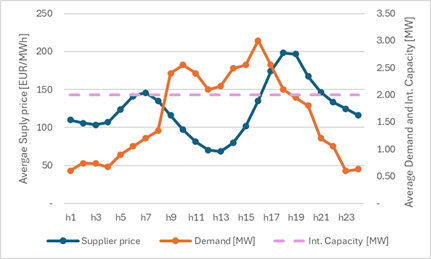 Figure 1: Energy Cost Comparison Before vs. After BESS Integration
💡 Why it works?
BESS charges when capacity and prices are low, then discharges when demand exceeds your grid limit. This helps you avoid curtailment and reduce exposure to expensive hours. Instead of waiting for DSOs to expand, you’re creating your own flexibility now. (additional revenues from grid services & trading where not taken into account)
| Cost | Base case | Best BESS |
|---|---|---|
| Retailer cost | € 1.538.064 | €1.663.225 |
| ENS cost | € 962.872 | € 25.462 |
| BESS cost | € 279.000 | |
| Total supply cost | € 2.500.936 | €1.967.687 |
Table 1: Subpply cost [EUR/year]
💰 Is it cost-efficient?
The real question isn’t whether BESS works technically, it’s whether it pays off financially. When comparing the base case (no battery) and the optimized 6 MWh BESS*, the overall energy price (including ENS cost) fell significantly.
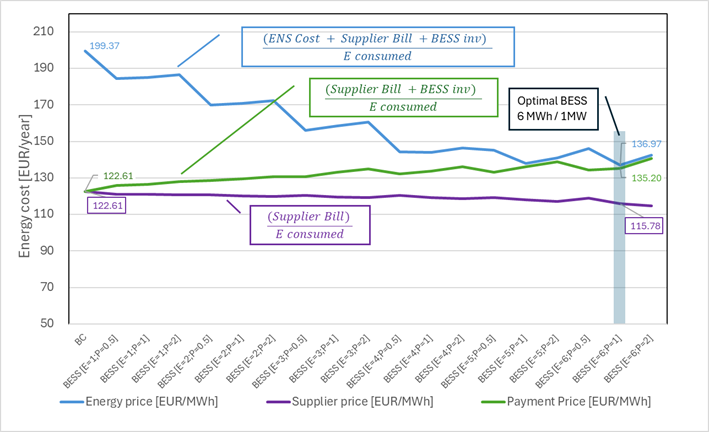 Figure 3: Average Supplier Price and All-in Energy Cost with and without BESS
📌 Key takeaways
- You don’t have to wait years for grid upgrades.
- A well-sized BESS can cut total energy cost by up to 21%.
- Results depend on your site’s data.
- On-site solar further boosts returns even more, we’ll adress this in another knowlegde article.
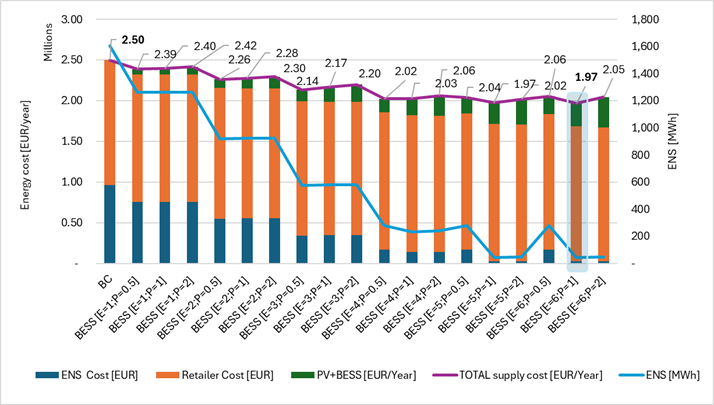 Figure 4: Average Supplier Price and All-in Energy Cost with and without BESS
🧭 Conclusion: Don’t wait, create flexibility now
If you’re stuck on a waiting list for more capacity, you’re not alone, but you don’t have to stay there. Behind-the-meter batteries let you take control, cut costs, and accelerate your sustainability goals all without waiting for the grid to catch up.
👉Electrification won’t wait. Neither should you.
If you’re an energy manager or a small- to medium-sized company with a large electricity connection, contact us at FuturaGrid.com for a bespoke calculation on how grid connection reforms or flexibility solutions could unlock your capacity and reduce your energy costs today.